Quick Answer: A hydrojetting appointment follows a set routine: we talk through your symptoms, find your sewer cleanout, run a camera through the line, clean it with high-pressure water, then run the camera again so you can see the result. For most homes it takes a couple of hours. Hydrojetting is safe for most pipes in sound condition, including older cast iron and clay. The camera inspection up front is what keeps it that way.
We’ve written before about why hydrojetting beats snaking and chemical drain cleaners. This post covers the part people ask about most once they’re ready to book: what actually happens when we show up.
Before the Hansen Family Air Conditioning & Plumbing Team Arrive
- Know where your cleanout is, if possible. It’s usually a capped pipe a few inches tall near the foundation or in the yard. If you can’t find it, don’t worry. Finding it is part of our job.
- Clear a path to the cleanout and to the bathroom or kitchen with the problem.
- Hold off on running water if drains are backing up.
- Put pets in another room. The equipment is loud and the hose moves.
Step 1: A Quick Conversation
Your technician will ask which drains are slow or backing up, how long it’s been going on, and whether the line has been snaked before. A drain that clogs every few months tells us something very different from a first-time backup.
Step 2: Finding the Access Point
We jet the main line from the sewer cleanout whenever possible. It keeps the work outside and gives the hose a straight path. If the home has no accessible cleanout, we’ll explain the other options, including installing one to make future service easier and less expensive.
Step 3: Camera Inspection First
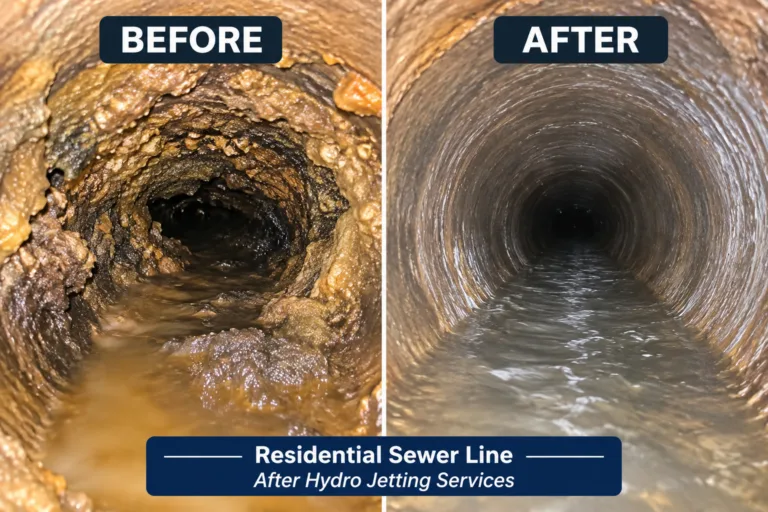
Before any water goes in, we run a video camera through the line. This tells us:
- What the blockage is: grease, roots, scale build-up, wipes or something else
- What the pipe is made of and what condition it’s in
- Whether hydrojetting is the right tool, and at what pressure
You’re welcome to watch the monitor with us. Most homeowners have never seen the inside of their sewer line, and it makes the rest of the visit make sense.
Step 4: The Jetting
The jetter sends water through a flexible hose to a specialized nozzle. Jets on the back of the nozzle push it forward and scour the pipe walls all the way around. Jets on the front break through the blockage. For roots, we use cutting nozzles built to slice through them.
Residential jetting typically runs somewhere around 1,500 to 4,000 PSI. We match the pressure and nozzle to your pipe’s size, material and condition. Everything we clear out is flushed downstream to the city sewer.
Step 5: Camera Inspection After
We run the camera through again so you can see the cleaned pipe for yourself. This second look also shows anything the buildup was hiding, like a crack, an offset joint or a spot where roots are getting in.
Step 6: Recommendations
If the line is in good shape, you’re done. If we found damage, we’ll show you the footage and explain your options, from monitoring it to a targeted repair or a trenchless liner.
Is Hydrojetting Safe for Older Pipes?
For pipe that’s structurally sound, yes. That includes PVC and ABS as well as older cast iron and clay that’s still intact.
The risk comes from pipe that’s already failing: cast iron that’s corroded paper-thin, clay that’s cracked through, or a section that has partially collapsed. High-pressure water won’t fix those problems, and it can make a weak spot worse. That’s exactly why we camera the line first. If we see pipe that can’t take it, we’ll adjust our approach, open the line another way, or recommend a repair instead.
Sometimes a cleaning reveals that a pipe is in rougher shape than anyone knew. That isn’t the jetting causing damage. It’s the buildup that was hiding it finally being gone.
How Often Should You Get Your Drain Lines Hydrojetted?
Most homes don’t need routine jetting. If your line has a history of root intrusion or grease buildup, a yearly cleaning is a common way to stay ahead of backups. We’ll give you a recommendation based on what we see on camera, not a one-size-fits-all schedule.
Frequently Asked Questions
Can I use my drains right after?
Yes. Once we’ve confirmed the line is clear, everything is back in service.
Will hydrojetting get rid of roots for good?
It often clears them completely, but roots grow back through the same cracks or joints. The long-term fix is sealing those entry points, often with a pipe liner.
Do I need to be home?
Yes. We need access to the property, and we want to walk you through the camera footage before we leave.
Ready to Get Your Sewer Lines Cleared to Prevent Backups?
If your drains keep coming back slow, call Hansen Family Air Conditioning and Plumbing or book online. Also be sure to ask about current hydrojetting offers when you call! Hansen Family – Customer Focused, Family Driven.