A slab leak is a water line leak underneath your home’s concrete foundation. The most common warning signs are a warm spot on the floor, the sound of running water when every fixture is off, an unexplained jump in your water bill, and new cracks in flooring or drywall. In Mesa, slab leaks are especially common because of our hard water, shifting clay soils, and the copper piping used in homes built before the mid-2000s. Left alone, a slab leak can undermine your foundation — so it needs professional leak detection, not a wait-and-see approach.
What Exactly Is a Slab Leak?
Most Mesa homes sit on a concrete slab foundation, and the water supply lines run either through or beneath that concrete. When one of those pressurized lines develops a pinhole or crack, water escapes under the slab with nowhere to go. That’s a slab leak.
It matters that these are pressurized lines. A drain leak only releases water when something upstream is running. A supply-line slab leak pushes water out continuously, 24 hours a day, which is why a small one can waste thousands of gallons before anybody notices.
7 Warning Signs of a Slab Leak
1. A Warm Spot on the Floor
This is the classic tell, and it points specifically to a hot water line. If one patch of tile or laminate is noticeably warm underfoot — and it isn’t sunlight from a window — you may be feeling heated water pooling under the concrete.
2. Running Water You Can Hear but Not See
Turn off every faucet, appliance, and ice maker in the house, then stand still and listen. A faint hiss or trickle in the floor or walls is a strong indicator.
3. A Water Bill That Jumped for No Reason
Compare your bill to the same month last year rather than last month — summer irrigation makes month-to-month comparisons useless in Arizona. A sudden unexplained increase deserves investigation.
4. Your Water Meter Moves With Everything Off
Shut off all water inside and outside, then check the meter’s leak indicator. If it’s still creeping, water is escaping somewhere in your system. This is the single most useful test a homeowner can run, and it takes two minutes.
5. Cracks in Flooring, Drywall, or the Foundation
Water under a slab moves soil. Moving soil moves the foundation. New cracks in tile grout, along baseboards, or above doorframes can be structural consequences of a leak that started months earlier.
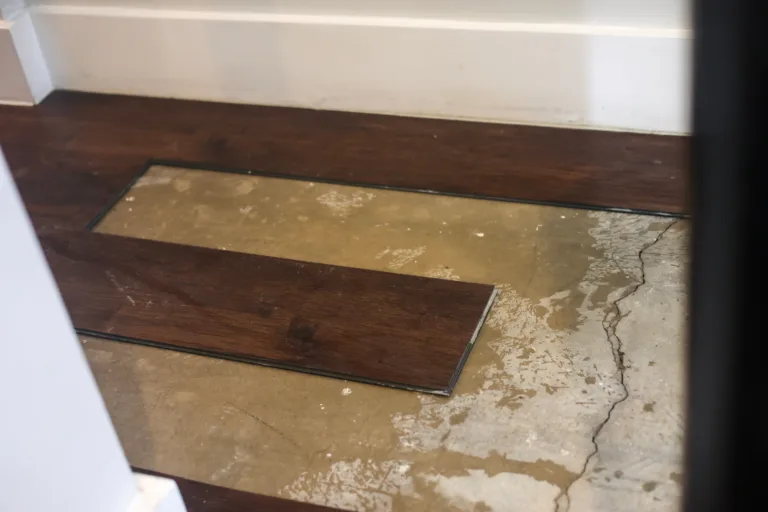
6. Damp Carpet, Buckled Flooring, or a Musty Smell
Moisture wicking up through concrete will discolor carpet, lift wood or laminate planks, and eventually feed mold. A persistent musty odor with no visible source is worth taking seriously.
7. Low Water Pressure Throughout the House
When a meaningful volume of water is escaping before it reaches your fixtures, pressure drops everywhere at once. Whole-house pressure loss is different from one slow faucet, which is usually just an aerator.
Why Slab Leaks Are So Common in Mesa
Slab leaks happen everywhere, but a few Arizona-specific conditions stack the deck against East Valley homeowners.
| Local factor | What it does to your pipes |
|---|---|
| Hard water | Phoenix-area water is high in dissolved minerals. Scale builds inside copper lines, restricting flow and accelerating corrosion from the inside out. |
| Expansive clay soils | Our soils swell when wet and shrink when dry. That seasonal movement flexes the pipes bedded in and under the slab. |
| Copper in older homes | Homes built before the mid-2000s often used soft copper under the slab, which is vulnerable to pinhole corrosion and to abrasion where it rubs concrete. |
| High water pressure | Pressure above roughly 80 psi stresses every joint and fitting in the system. Many valley homes run higher than they should without the owner knowing. |
| Long, hot run times | Hot water lines expand and contract with every cycle. Over decades, that movement wears through pipe walls where they contact concrete or rebar. |
If you’ve read our guide to hard water in Arizona, you already know how much damage our mineral content does over time. Slab leaks are one of the more expensive ways that damage shows up.
How Slab Leaks Are Found
Finding a leak under concrete without tearing up the whole floor is the entire skill. A proper diagnosis is non-invasive and follows a sequence:
- Pressure isolation testing — determines whether the leak is on the hot or cold side, and confirms it’s a supply line rather than drainage.
- Acoustic listening equipment — amplifies the sound of pressurized water escaping, which is inaudible through concrete to the naked ear.
- Thermal imaging — maps temperature differences across the slab to narrow down a hot water leak.
- Electronic line tracing — maps where your pipes actually run, which is rarely where the original blueprints claim.
- Video inspection — rules out drain and sewer issues that can mimic slab leak symptoms.
The goal is a specific location before anyone touches the concrete. Our leak detection service exists precisely so that the repair is targeted instead of exploratory, and we use camera inspections to confirm what we’re dealing with.
Your Repair Options
Once the leak is located, there are generally three paths. Which one makes sense depends on the age of your plumbing, how many leaks you’ve had, and where the leak sits.
| Method | How it works | Best when |
|---|---|---|
| Spot repair | Open a small section of slab, repair or replace the damaged length of pipe, restore the concrete. | Piping is otherwise in good shape and this is a first, isolated leak. |
| Reroute | Abandon the failed under-slab line and run a new line through walls or attic, bypassing the slab entirely. | The leak is hard to reach, or you’d rather not open the floor in a finished living area. |
| Whole-home repipe | Replace the home’s supply plumbing with new material. | You’ve had multiple leaks, or the system is old enough that the next leak is a question of when. |
A single leak in an otherwise healthy system usually calls for a spot repair or reroute. But if you’re on your second or third slab leak, each one is telling you the same thing: the material is at the end of its life. At that point repeated spot repairs cost more than fixing it once. Our water line services cover all three approaches, and we’ll tell you honestly which one your home actually needs.
Can You Prevent a Slab Leak?
Not entirely — but you can meaningfully extend the life of the pipes you have.
- Check your water pressure. If it’s above 80 psi, a pressure regulator protects every pipe, fitting, and appliance in the house.
- Treat the hard water. A water softener slows the scale buildup and interior corrosion that shorten pipe life.
- Watch your bill and meter. Catching a leak in week one instead of month six is the difference between a repair and a restoration project.
- Don’t ignore the small stuff. Recurring low pressure, discolored water, or a water heater that struggles can all be early symptoms.
- Know your shutoff. Every adult in the house should know where the main shutoff is and how to use it before there’s an emergency.
What Happens If You Wait
Slab leaks don’t plateau. Water keeps escaping under pressure, saturated soil keeps moving, and the damage compounds — from wasted water, to ruined flooring, to mold remediation, to foundation work. A leak caught early is a plumbing repair. A leak ignored for a year can become a structural one.
If you’re seeing two or more of the warning signs above, get it looked at now rather than after the holiday weekend.
Frequently Asked Questions
Detection is priced separately from repair because locating the leak is its own job. Costs vary with the size of the home and how much of the system has to be isolated. We give you a firm number before any work starts, and financing options are available. Call (602) 805-4836 and ask about our current specials when you book.
Many Arizona policies cover the resulting water damage and the cost of accessing the pipe, but not the pipe repair itself. Coverage varies a great deal between carriers, so read your policy or call your agent. Documentation from a professional leak detection helps any claim.
A straightforward spot repair is often completed in a day. A reroute typically takes one to two days. A whole-home repipe usually runs several days depending on the size of the house.
No. Slab leaks are on pressurized lines, so they release water continuously and get worse rather than stabilizing. Waiting turns a contained plumbing repair into flooring, mold, and potentially foundation damage.
No. That is exactly why we invest in acoustic, thermal, and electronic detection first. The point is to open the smallest possible area — and with a reroute, often none of the slab at all.
Sometimes, though many home warranty plans cap the payout well below the real cost or exclude access and restoration. Check your specific contract before assuming you are covered.
Talk to a Neighbor Who Does This Every Day
We’re a family-owned company based right here in Mesa, and we’ve been finding and fixing slab leaks across the East Valley since 2013. If something in your house feels off — a warm patch on the floor, a bill that doesn’t add up, water you can hear but can’t find — we’d rather take a look and tell you it’s nothing than have you find out the hard way six months from now.
Call (602) 805-4836 or schedule online. We’re open 7 days a week, financing options are available, and it’s always worth asking about our current specials when you book.