If you’ve ever noticed white, chalky buildup on your faucets or spot crusty deposits around your showerhead, you’ve already met Arizona’s hard water. It’s one of the most common, and honestly most overlooked plumbing issues homeowners in our state deal with, and it can cause a lot more damage than most people realize.
At Hansen Family Air Conditioning and Plumbing, we help Arizona families protect their plumbing from the effects of hard water every day. Here’s what you need to know about what’s really going on inside your pipes.
What Is Hard Water, and Why Is Arizona’s So Bad?
Hard water simply means your water supply contains a high concentration of dissolved minerals, primarily calcium and magnesium. These minerals are picked up naturally as water moves through rock and soil before reaching your home.
Arizona’s water is some of the hardest in the country. Most cities across the state see hardness levels ranging from about 10 to 22 grains per gallon (gpg), with some areas climbing even higher. To put that in perspective, water is classified as “hard” at just 7 gpg and “very hard” above 10.5 gpg. Phoenix’s water typically ranges between 10 and 17 gpg, Mesa falls between 12 and 22 gpg, and Scottsdale ranges from 12 to 20 gpg. Much of this comes from Arizona’s primary water sources — the Colorado River and local groundwater wells — which naturally pick up minerals from the desert landscape.
It’s not a health hazard, but it can be a serious problem for your plumbing, appliances, and wallet.
The Damage You Can See
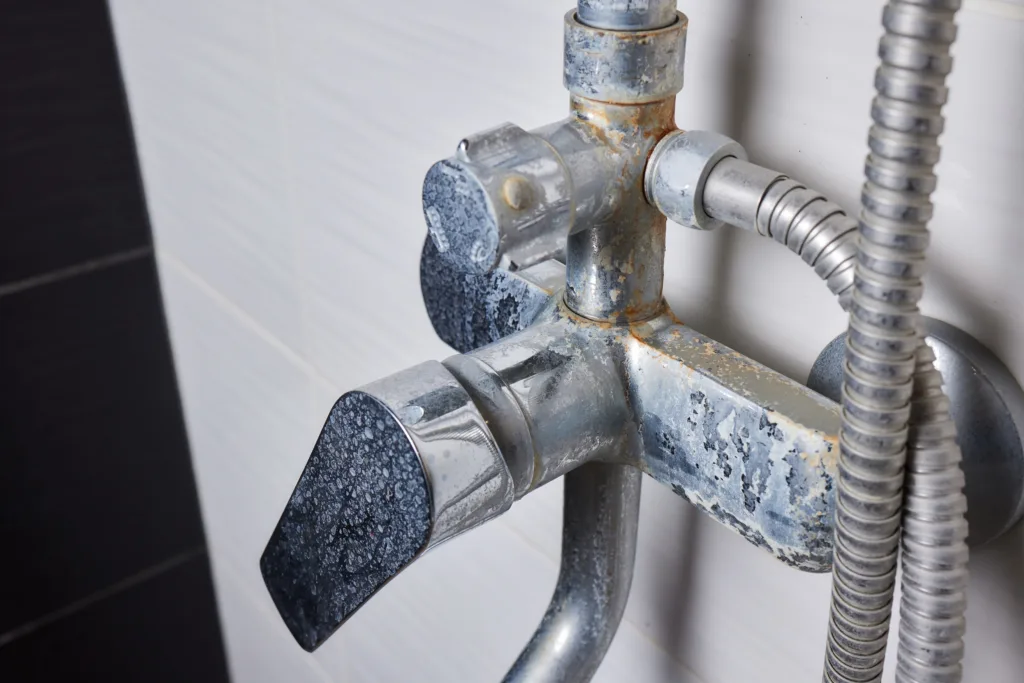
The most obvious signs of hard water are the ones you notice every day. That white or yellowish scale that builds up around your faucets, on your shower doors, and inside your toilet bowl? That’s mineral deposits left behind as water evaporates.
You might also notice spots and film on dishes and glassware even after running the dishwasher, clothes that come out of the wash feeling stiff or looking faded, soap and shampoo that don’t lather well leaving your skin feeling dry and your hair dull, and stubborn stains in sinks and tubs that seem impossible to scrub away.
These are more than cosmetic annoyances, they’re signs that hard water is affecting your home from top to bottom.
The Damage You Can’t See
The real cost of hard water is what’s happening behind the walls and inside your appliances. Over time, mineral deposits build up inside your pipes, gradually narrowing the opening that water flows through. This restricts water pressure and can eventually lead to clogs or even pipe failure.
Your water heater takes one of the biggest hits. As hard water is heated, minerals settle to the bottom of the tank and form a thick layer of scale. This forces your water heater to work harder to heat the same amount of water, driving up your energy bills and shortening the lifespan of the unit. In Arizona, where water heaters already work overtime thanks to our extreme temperatures, hard water can cut years off your equipment.
Dishwashers, washing machines, and any other appliance connected to your water supply are affected too. Scale buildup reduces efficiency, increases the chance of breakdowns, and means you’ll likely be replacing these appliances sooner than you should.
How a Water Softener Can Help
The most effective solution for hard water is a whole-home water softener. These systems work by removing calcium and magnesium from your water before it flows through your pipes and into your appliances. The process, called ion exchange, swaps those hard minerals for sodium or potassium ions, giving you softer water throughout your entire home.
The benefits are noticeable almost immediately. You’ll see cleaner dishes and glassware without spots or film, softer skin and hair after showering, clothes that feel softer and hold their color longer, and less soap and detergent needed for everyday cleaning. On top of that, you’ll notice reduced scale buildup on fixtures and inside appliances, and a water heater that runs more efficiently and lasts longer.
For most Arizona homes, a water softener pays for itself over time through lower energy bills, fewer appliance repairs, and less money spent on cleaning products.
What About Salt-Free Conditioners?
You may have seen salt-free water conditioners marketed as an alternative to traditional water softeners. These systems don’t actually remove minerals from the water. Instead, they change the structure of the minerals so they’re less likely to stick to surfaces and form scale.
Salt-free conditioners can help reduce buildup in some cases, but they won’t give you the same results as a true water softener. You’ll still deal with spots on dishes, dry skin, and many of the other effects of hard water. For Arizona’s extremely hard water, a traditional softener is usually the better investment.
Reverse Osmosis for Drinking Water
Many Arizona homeowners pair their water softener with a reverse osmosis (RO) system at the kitchen sink. While a softener handles the whole house, an RO system provides an extra level of filtration specifically for your drinking and cooking water. It removes dissolved solids, chlorine, and other contaminants, giving you clean, great-tasting water straight from the tap.
If you’ve been buying bottled water because your tap water tastes off, an RO system can save you money and eliminate all that plastic waste.
Protect Your Plumbing Before the Damage Adds Up
Hard water isn’t going to go away on its own, it’s just part of living in the desert. But that doesn’t mean you have to live with the consequences. A quality water softener, paired with regular plumbing maintenance, can protect your pipes, extend the life of your appliances, and make everyday tasks like showering and doing dishes a whole lot more pleasant.
Hansen Family Air Conditioning and Plumbing can help you find the right water treatment solution for your home. We’ll test your water, walk you through your options, and handle the installation so you can start enjoying the benefits of softer water right away.
📞 Give us a call today to schedule a free water quality consultation.
Hansen Family Air Conditioning and Plumbing — Keeping Arizona families comfortable, one home at a time.